The 60-30-10 Rule That Makes Styling Outfits Surprisingly Easy
Many people have experienced the same moment in front of their closet. You open the door, see plenty of clothes, and still feel unsure about what to wear.
For some people, the problem feels like having too many options. The closet is full, yet putting together an outfit still feels surprisingly difficult.
For others, the problem appears to be the opposite. They feel like they simply do not own enough pieces to create interesting combinations.
At first glance, these seem like completely different situations. One feels like excess. The other feels like a limitation.
But in many cases, both experiences point to the same underlying issue: the absence of a clear visual structure for how pieces should work together.
Getting Dressed Shouldn’t Feel This Hard
When there is no framework guiding the outfit, every item becomes a new decision. Individual items work well on their own, yet when they are placed together, the result can feel slightly off without a clear reason why.
Designers face this same challenge whenever they create visual compositions. Whether they are designing a room, a website, or a brand identity, they cannot simply combine elements randomly and expect the result to feel balanced.
Instead, they rely on simple principles that guide how different elements relate to each other.
One of the most widely used is known as the 60-30-10 rule.
And perhaps unsurprisingly, it can make getting dressed much easier.
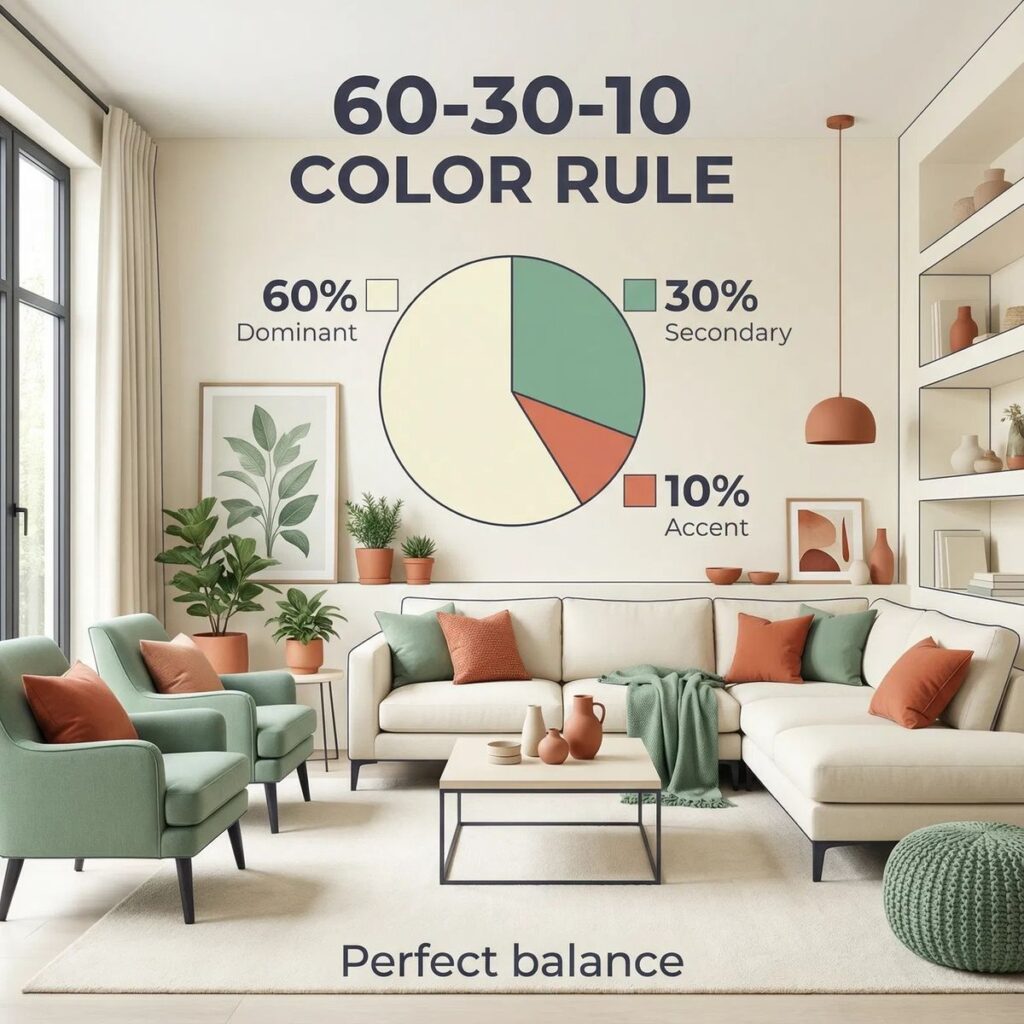
The 60-30-10 Rule and Why It Works for Clothing
At its core, the rule is simple. It divides colours in a composition into three proportions.
About 60 percent becomes the dominant colour, around 30 percent becomes the secondary colour, and the remaining 10 percent becomes the accent.
This same principle applies surprisingly well to clothing.
The 60-30-10 rule helps by giving each piece a clear role.
The 60 percent portion becomes the base of the outfit. This might be a dress, trousers, or a coat that sets the tone.
The 30 percent portion becomes the supporting element, adding contrast or depth.
The 10 percent portion becomes the accent. Accessories often play this role. A belt, handbag, shoes, or jewellery can introduce a small amount of colour, texture, or shine that completes the look.
Thinking in these terms simplifies the process of getting dressed.
This structure also reduces decision fatigue. Getting dressed becomes a series of smaller, clearer choices rather than endless combinations.
What the Rule Looks Like in Real Outfits
The concept becomes intuitive once you see how it applies to everyday outfits.
Think of the rule less as exact percentages and more as a way to distribute visual weight across what you are wearing. One element leads, another supports it, and a third adds a small point of interest.
Cream Dress Ensemble
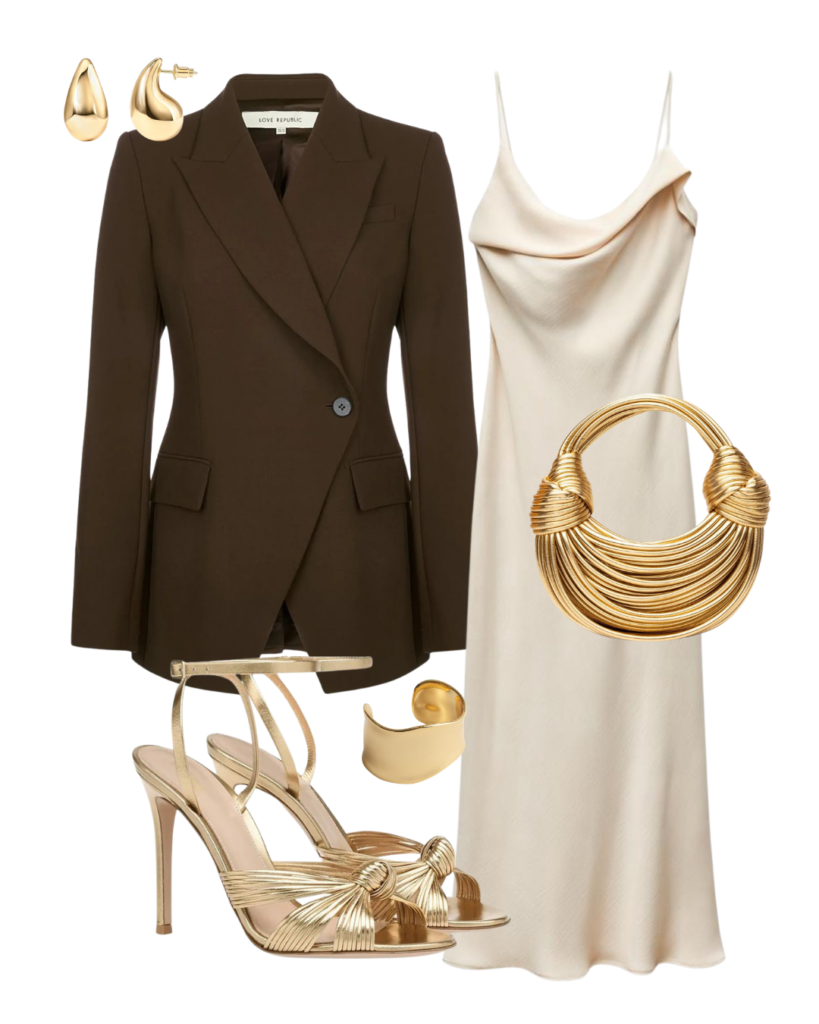
Imagine an outfit built around a cream dress. The dress naturally takes up most of the visual space, so it becomes the 60 percent base. A brown blazer layered over it could make up the 30 percent supporting piece. Gold jewellery or a small handbag could provide the 10 percent accent.
Casual Outfit
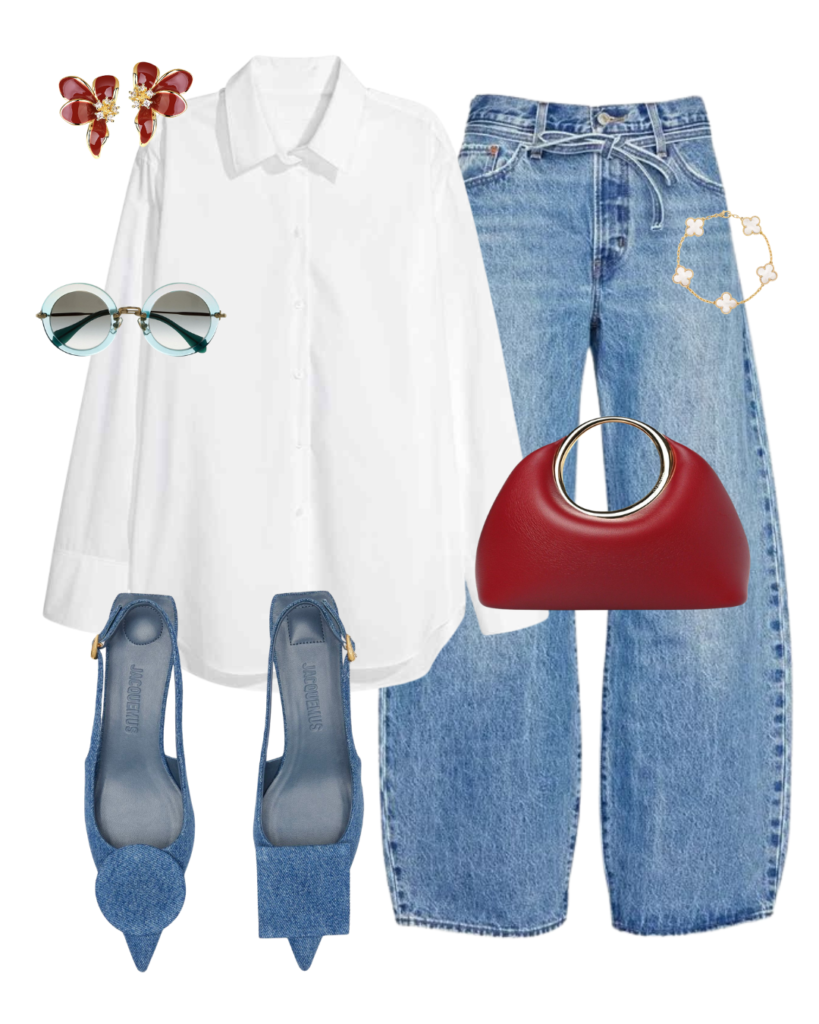
The same principle works well in casual outfits. A pair of denim jeans might act as the 60 percent foundation, with a white shirt serving as the 30 percent supporting piece. A red handbag or pair of shoes can introduce the 10 percent accent that adds personality without overwhelming the outfit.
Neutral Vibe
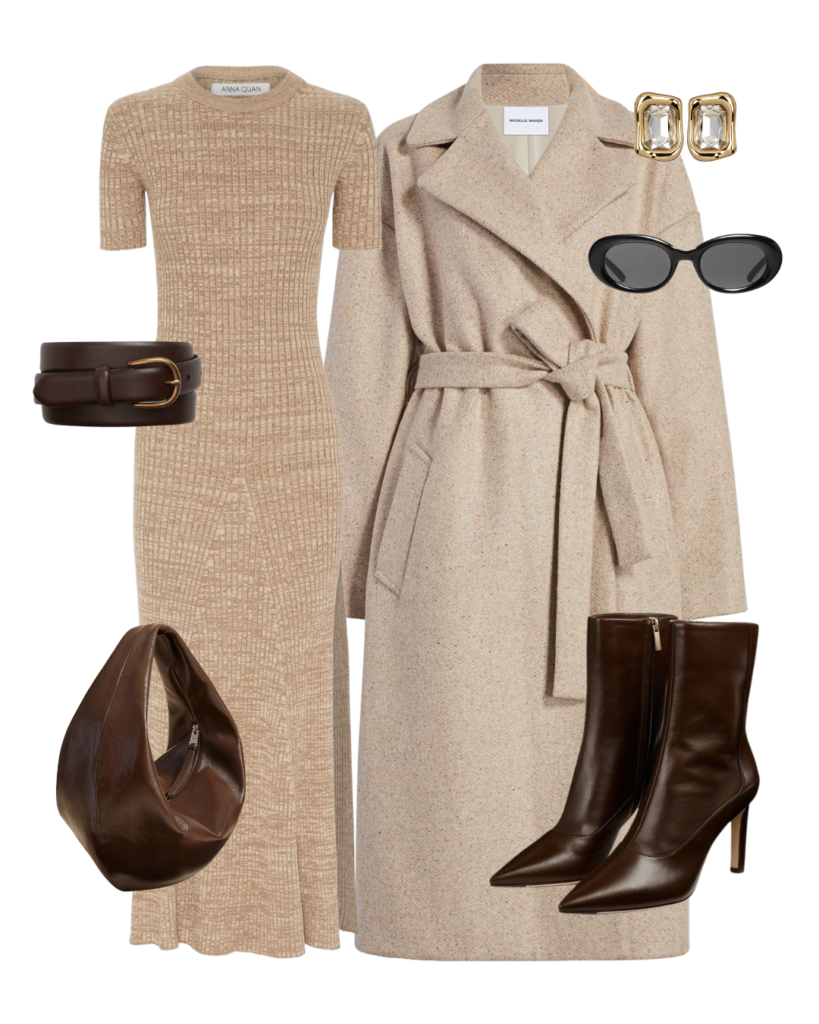
This approach also works for people who prefer neutral wardrobes. Balance does not always come from bold colour contrasts. It can also come from differences in tone, material, or texture.
For instance, a wool coat might dominate the look as the 60 percent base, while a cotton dress underneath creates the 30 percent supporting layer. A leather belt or bag can then act as the 10 percent accent.
Instead of trying to make every piece stand out, the goal becomes allowing one element to lead while the others support it.
The Bigger Lesson: Structure Makes Style Easier
One reason getting dressed can feel difficult is that many people assume style is purely creative.
In reality, much of what we interpret as good style often comes from simple visual principles.
The 60-30-10 rule is one example of how structure can shape the way an outfit feels.
This does not mean every outfit must follow the rule perfectly. What matters most is the idea behind it: giving different pieces clear roles instead of letting everything compete for attention.
For people who feel overwhelmed by getting dressed, it can help to start by identifying the base of your outfit, adding a supporting piece, and finishing with a small accent.
The process becomes less about finding something new to wear and more about arranging what you already own in a way that feels balanced.
A simple framework cannot replace personal style. But it can make getting dressed faster and far more intentional.