What Copying Pinterest Outfits Taught Me About Personal Style
What Copying Pinterest Outfits Taught Me About Personal Style
A few months ago, I started a series on my social media where I recreated outfits I found on Pinterest.
My phone was already filled with screenshots of looks I loved, so the idea felt natural. But I added one rule for myself: I wouldn’t buy anything new. Every outfit had to be recreated using pieces I already owned.
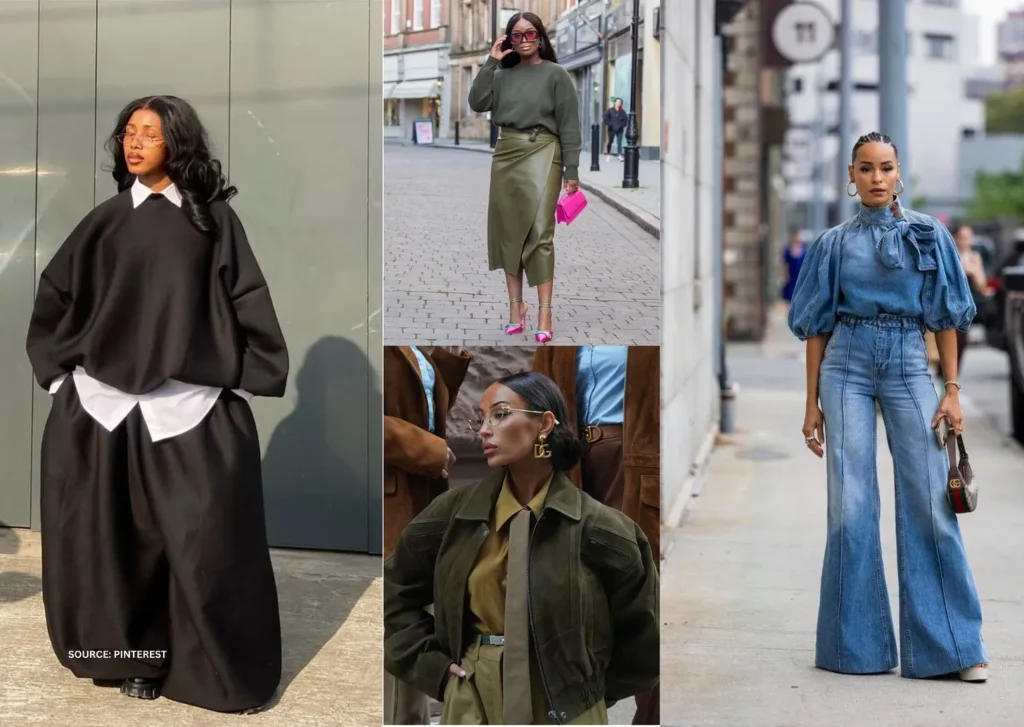
If you’ve been following along on my socials, you already know how much fun the process has been. And if you haven’t, you can join the journey on Instagram, TikTok, Facebook, and YouTube.
But when I first started the experiment, one question kept coming to mind: Is copying the opposite of personal style? And another question followed close behind: Why do we tend to frown on copying in the first place?
But here’s what this experiment taught me.
Copying isn’t the problem.
Staying a copy is.
And that distinction changes everything.
What People Actually Mean by Personal Style
When people say someone has a strong personal style, they rarely mean that the person is wearing something completely new or never seen before.
More often, they mean that the clothes feel like an extension of the person.
You know that feeling when you see a piece of clothing on a rack and instantly think of someone who would wear it perfectly? That’s personal style.
To me, personal style is the outward expression of what you feel internally.
It’s how identity, taste, mood, and lifestyle translate into the clothes you choose to wear.
And because of that, everyone is capable of developing a personal style. Some of us just need to spend a little more time figuring out what that expression looks like.
That’s where copying can actually help.
Copying Is How We Learn
Think about how we learn anything.
Writers often begin by studying — and sometimes imitating — the authors they admire. Artists spend years recreating the work of masters to understand technique. Athletes analyze game footage to improve their performance. Researchers read extensively before forming their own ideas.
Even Pablo Picasso mastered traditional techniques before developing the style that made him famous.
Mastery rarely appears out of nowhere. It develops through observation and imitation.
Recreating Pinterest outfits was simply my version of studying.

Through the process, I began to notice details I hadn’t fully understood before: how proportion changes an outfit, how colour combinations create balance, how structure alters presence, and how layering can elevate something simple.
It turned out to be one of the most practical ways to understand why certain outfits work.
When Copying Starts to Feel Like You
At first, recreating someone else’s outfit felt a little unnatural.
I would look at a Pinterest image, try to mirror it as closely as possible, and feel slightly self-conscious — almost like I was wearing someone else’s identity.
But the more I experimented, the more comfortable the process became. I stopped trying to create a perfect replica. Instead, small differences began to appear: a different shoe, a softer silhouette, or a more muted colour palette.
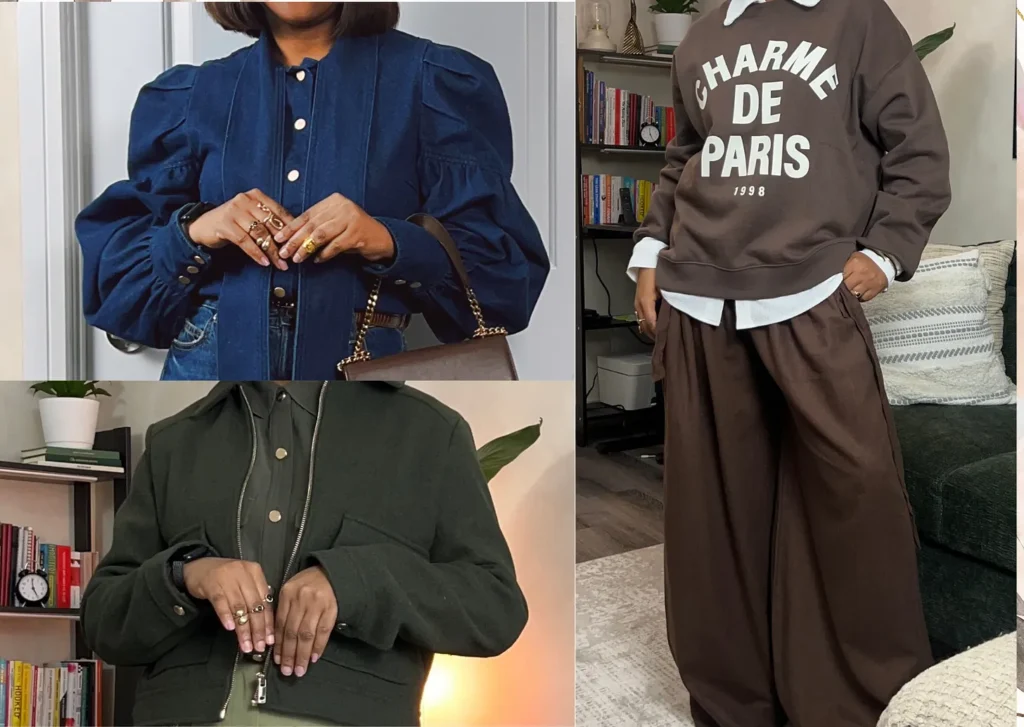
And interestingly, people started responding more strongly to those versions. Something about them began to feel more like me.
The Difference Between Copying and Developing Style
Here’s what I realized. If you copy one person and stop there, you risk becoming a diluted version of them. But if you draw inspiration from many sources, something different happens.
Think of it like research. If you take one source and present it as your own, that’s imitation.But if you study multiple sources, notice patterns, form ideas, and express your own interpretation, that becomes originality.
Style works exactly the same way.
A Simple Way to Discover Your Style
If you want to try this yourself, start by saving images of outfits that genuinely catch your attention. Don’t overthink it. Just collect what naturally draws you in.
After you’ve gathered enough images, begin grouping them. You’ll start noticing patterns. Maybe you’re consistently drawn to: tailored silhouettes, relaxed and oversized shapes, minimal colour palettes, or layered looks.
Once you see the patterns, assign a word or short phrase to each group.
Then narrow it down to three core themes. For example: sharp, relaxed, intentional. Those three words become your personal filter.
When you get dressed or consider adding something to your wardrobe, you can ask yourself: Does this align with my three words?
The Real Lesson
Recreating Pinterest outfits didn’t make me less original. If anything, it made me more aware.
It helped me understand what resonates with me and what doesn’t. And that kind of clarity naturally builds confidence.
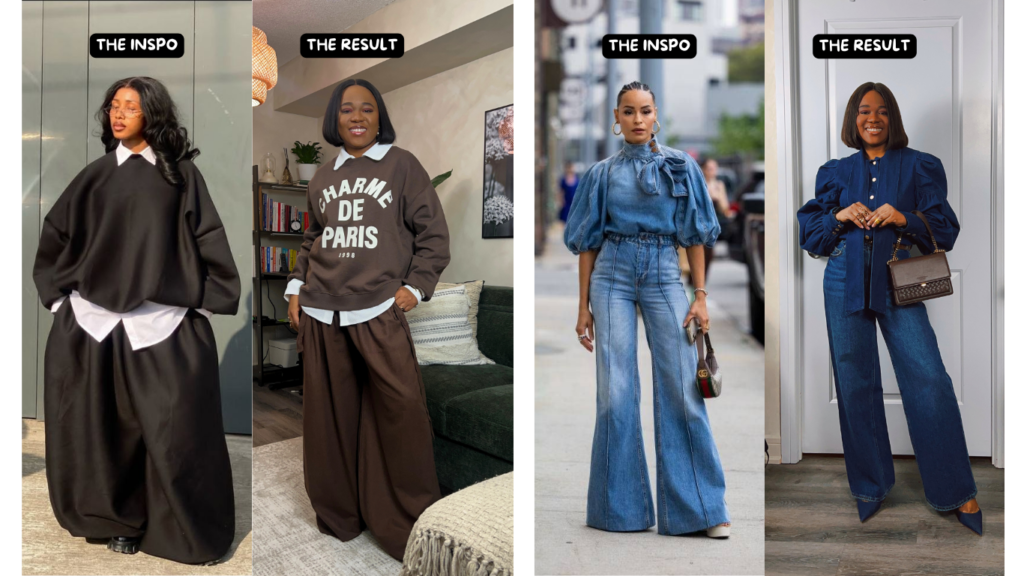
That’s the real takeaway. Personal style isn’t something you magically wake up with. It’s something you develop through exposure, reflection, and evolution. And sometimes, the path to originality begins with copying.
This is a great way to create one’s own style. Copying is not such a bad concept looking at it from this perspective. Interesting and inspiring read.
Thanks, Anslem for reading! I agree with you.