Why Some Outfits Feel Flat…Even When Everything “Works”
Most of us know the feeling.
You get dressed, look in the mirror, and technically, nothing is wrong.
That moment often sends us into fixing mode. We add another accessory. Swap shoes. Try a jacket.
Sometimes we think we need to buy something new, assuming the issue is that we are missing a piece.
But over time, I noticed something that changed how I get dressed entirely. The outfits that felt strongest to me were mostly doing one thing well. These looks were not trying to compete on multiple fronts at once.
Understanding this has made getting dressed faster, easier, and far less frustrating.
Recently, I stumbled on a trending TikTok sound that re-echoes this sentiment:
If an outfit isn’t interesting through colour, then it has to be interesting through shape. And if it’s not interesting by shape, then it needs to be interesting through texture. And if it’s not interesting by texture, then it has to be interesting by colour.
What this trend is really saying is this: when everything is competing, nothing stands out.
Here are three ways to make your outfit stand out.
1. Colour
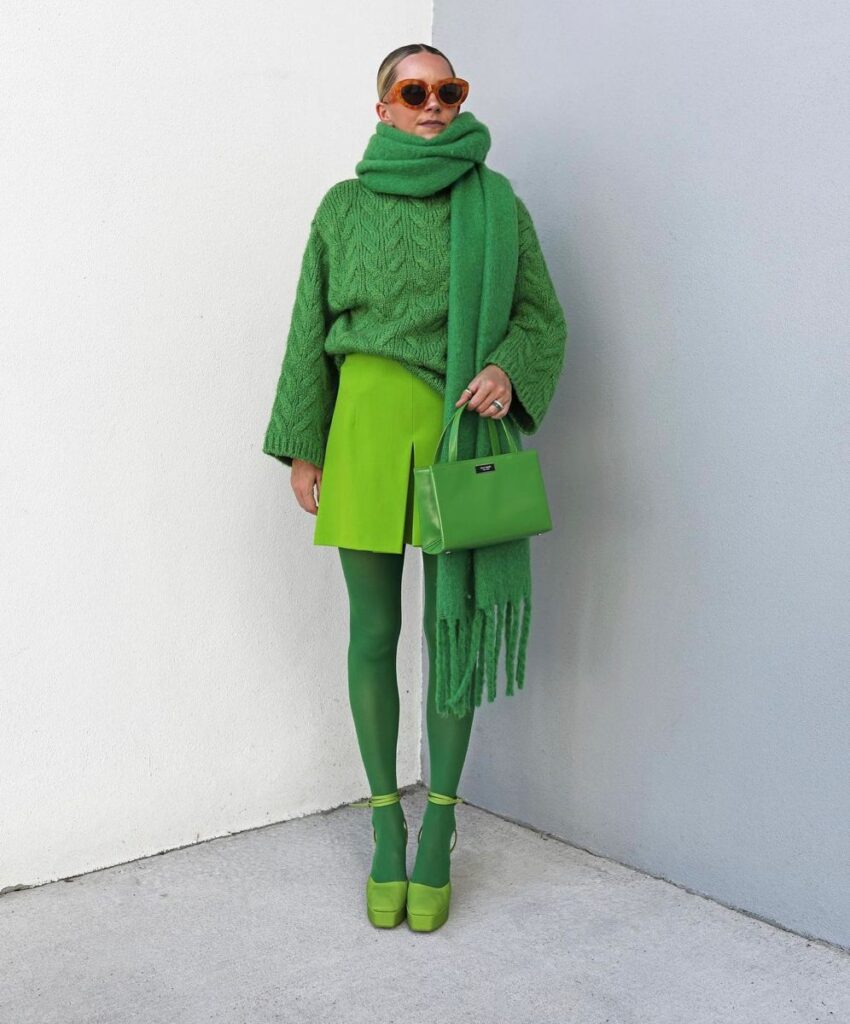

It is easy to default to an all-black outfit, and that is not a bad choice. Black is reliable and polished. But if your neutrals feel flat, the answer is often colour.
Colour does three key things.
It directs attention, since the richest or brightest shade becomes the focal point.
It communicates emotion. Deep greens feel grounded, reds feel bold, and blues can feel calm or authoritative.
And it shapes perception. Darker tones elongate. Brighter ones stand out.
Here’s my recommendation: If you want to experiment with colour without feeling overwhelmed, start small.
Add a pop of colour
Introduce colour through accessories like shoes, bags, or scarves. Even your lipstick can help elevate the look.
Try tonal dressing
One colour in varying shades can feel cohesive and intentional.
Let undertones guide you
Instead of asking if you can wear a colour, ask how it makes you feel. Does it brighten you? Does it align with how you want to show up? This should be a guide, but they are not a rule.
Adjust the shade
If a colour feels off, adjust the shade rather than abandoning it. Try mustard instead of bright yellow or dusty rose instead of neon pink.
2. Shape
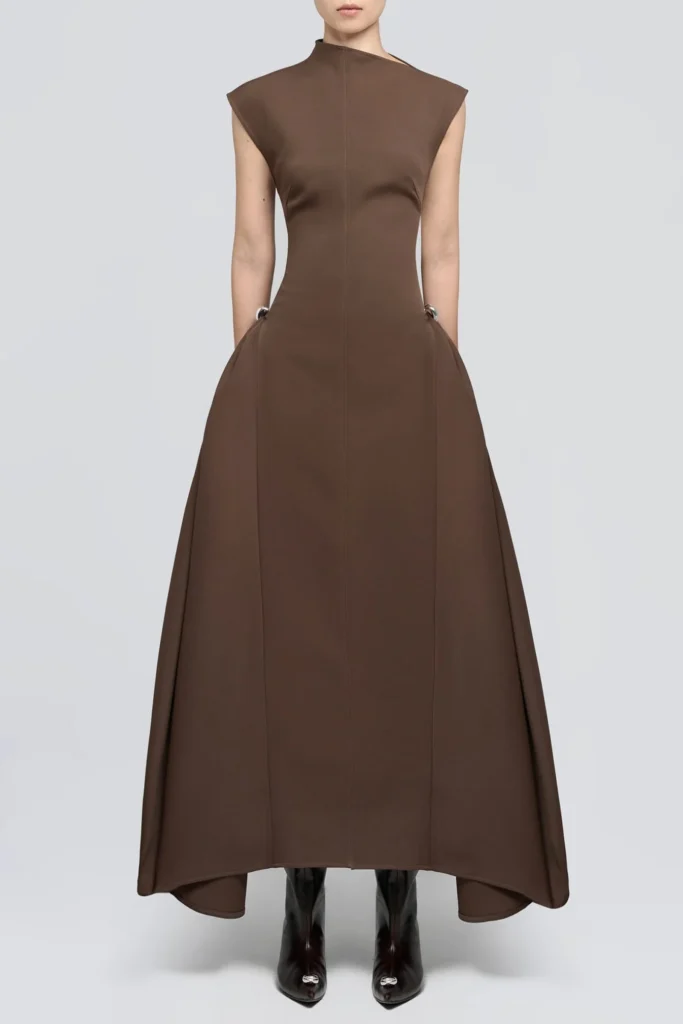
Another way to elevate an outfit that feels flat is by focusing on its shape or structure.
You can almost always find me reaching for pieces that have a bit of structure.
Structure elevates a look. It subtly shapes how your body is perceived, whether that means elongating or softening it. Often, that architectural detail is what transforms something simple into something memorable.
Structure is what gives an outfit presence.
Even when the colour is dull and the texture is minimal, it can create interest through silhouette alone. It changes how the eye travels and defines proportion.
Structure can be subtle.
A softly cinched waist that creates definition.
A slightly tailored shoulder that adds polish without feeling stiff.
Even the way a fabric holds away from the body instead of clinging can shift how an outfit reads.
It can also be bold.
Architectural sleeves, wide-leg trousers that elongate the frame, a sharply defined blazer, or volume placed intentionally at the shoulder or hip to rebalance the silhouette.
When shape is doing the work, the silhouette becomes the focal point. Accessories can stay minimal, and colour can remain restrained.
3. Texture
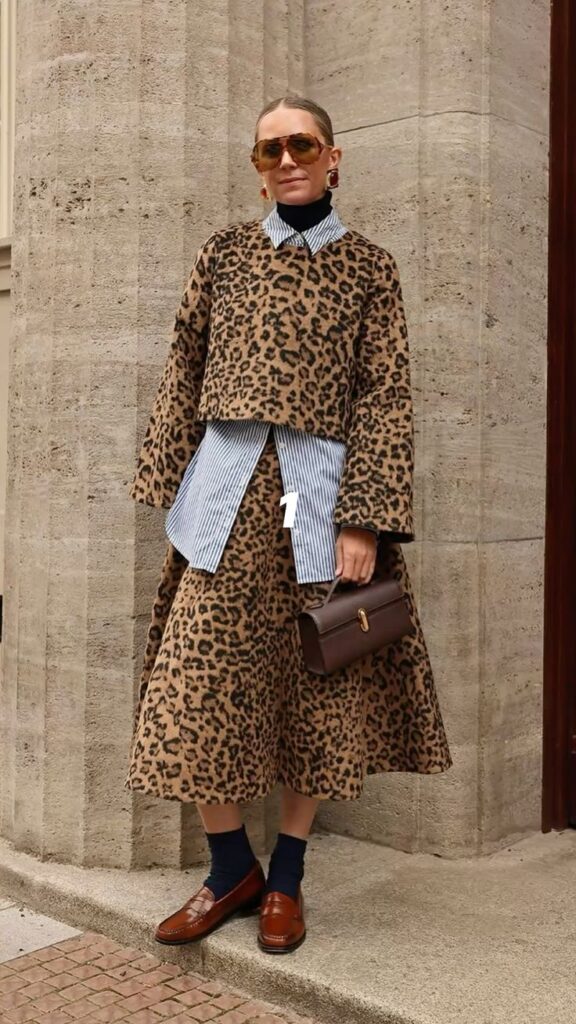
Another way to elevate an outfit that feels flat is by focusing on texture.
You can do this by selecting fabrics that have some kind of surface interest, even when the colour palette is simple.
Texture elevates a look because it creates depth without needing bold colour or dramatic shape. It adds subtle contrast that transforms a basic outfit from feeling two-dimensional.
One way I like to think about texture is by dividing it into two types: visual and structural. This distinction helps me decide what an outfit really needs.

Visual texture is what I would call two-dimensional.
Two-dimensional texture creates the perception of form without adding physical volume. It is perceived by the eye rather than through physical depth.
Prints, patterns, subtle jacquard, stripes, or embroidery that sits relatively flat all fall into this category.
Structural texture is three-dimensional.
Three-dimensional texture creates form through structural depth. It changes the height, contour, or surface of the garment itself.
Knots, ruching, pleats, fringe, quilting, chunky knits. These fabrics move away from the body and create shadow, dimension, and physical depth.
When texture is doing the work, you do not need to rely on loud colour or excessive accessories. The interest is already embedded in the materials. The outfit feels intentional because the fabrics are carrying the visual weight.
The Lesson
What this has taught me is that an outfit doesn’t need to rely on everything at once to feel interesting.
When colour is doing the work, shape and texture can stay quiet.
When structure leads, the colour can stay restrained.
And when texture is the focus, simplicity becomes a strength instead of a limitation.
It’s amazing how categorizing clothing like this can help elevate one’s style which in turn boosts confidence.
You simple approach to fashion is amazing plus you tell a good story.
Hi Anslem,
Thanks for the kind message—I really appreciate it. I’m glad the simple approach to categorizing clothing resonated with you and that you enjoyed the storytelling as well.
Appreciate the encouragement!
This comment means a lot. I’ve been working on my storytelling.