Practical Tips to Pack Your Luggage for a Flight Without Overpacking
There’s a version of travel stress we don’t talk about enough.
And no, it’s not the flight delays or long security lines. It’s the small, repeated friction that shows up once you arrive at your destination.
Opening your suitcase and not remembering what you packed. Digging through layers of clothes every morning. Putting together outfits that technically work but don’t quite feel right. And somehow, even with a full suitcase, you still feel unprepared.
I’ve been there. I used to be one of those “just in case” packers. More tops, an extra pair of shoes, something “just in case.” When packing, it made sense, but in reality, it made everything harder.
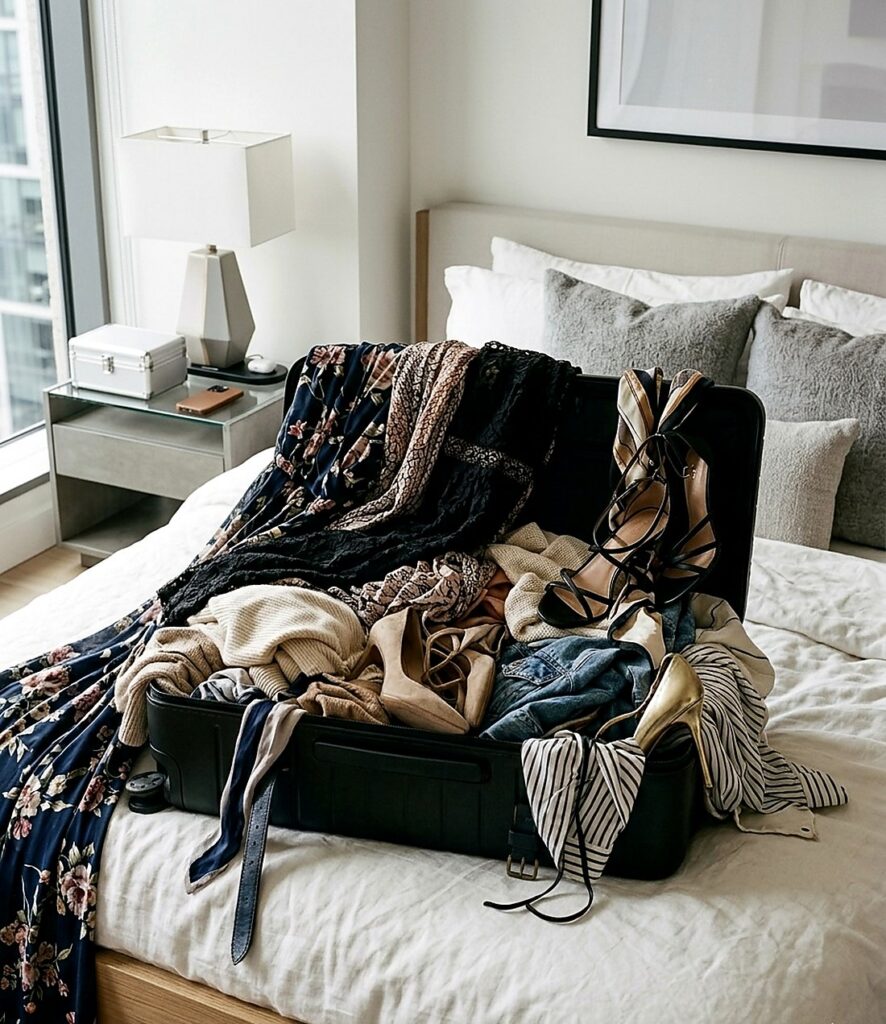
What changed for me wasn’t packing less. It was packing with structure.
Because overpacking isn’t really about the number of items you bring. It’s about the lack of a system.
Here are my top practical tips to pack your luggage for a flight without overpacking.
1. Plan your outfits first so you don’t pack random pieces
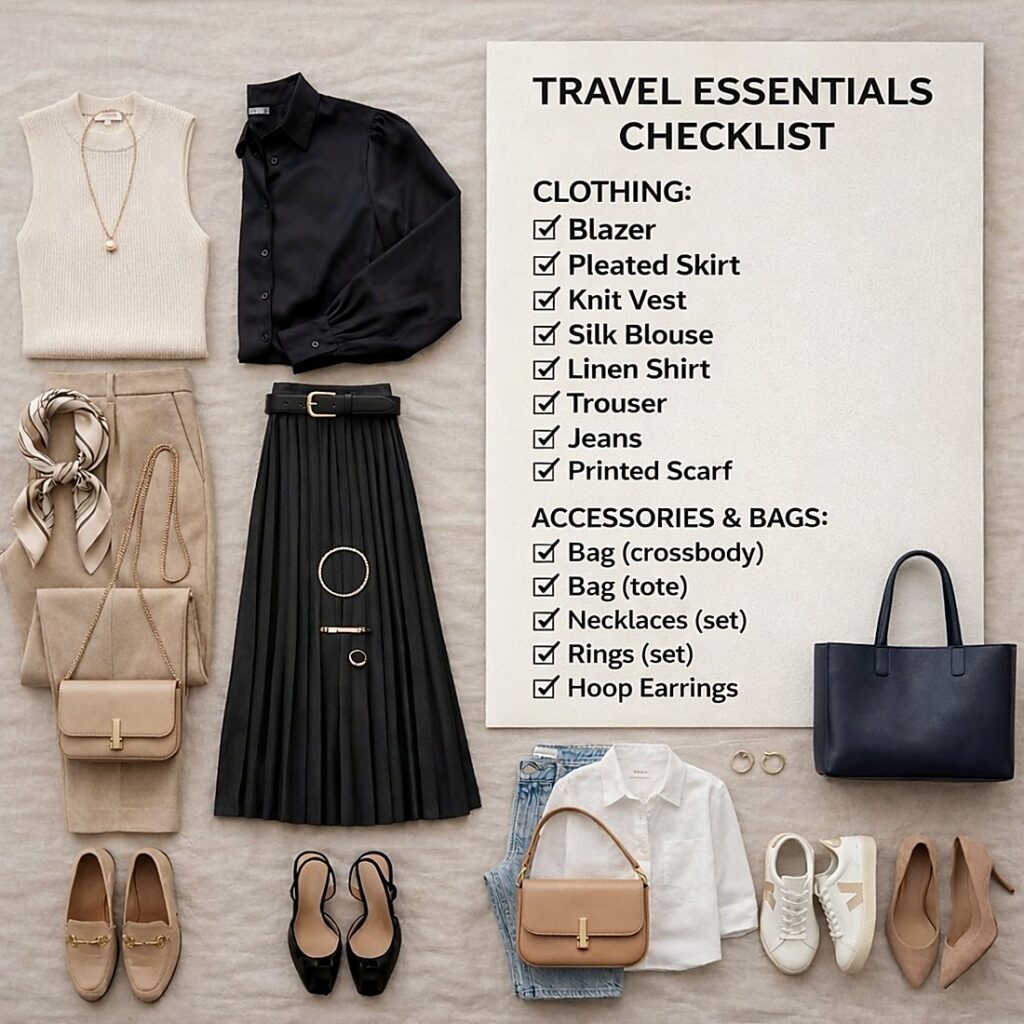
Most overpacking starts before the suitcase is even open. It starts with uncertainty around what you’ll wear, so you compensate by bringing more. Instead:
Start with outfits: Think in combinations rather than individual pieces. What are you actually going to wear for each day or type of activity? Once you can see your outfits clearly, the need for “extras” naturally reduces.
Use a simple packing list: A simple packing list can help here. Not a long, overwhelming one, but a focused list based on your plan. It keeps you from adding things last minute that don’t really belong.
Keep your colour palette consistent: This makes everything easier. When your pieces work together, you don’t need as many of them because they become modular.
2. Organize your luggage to prevent overpacking
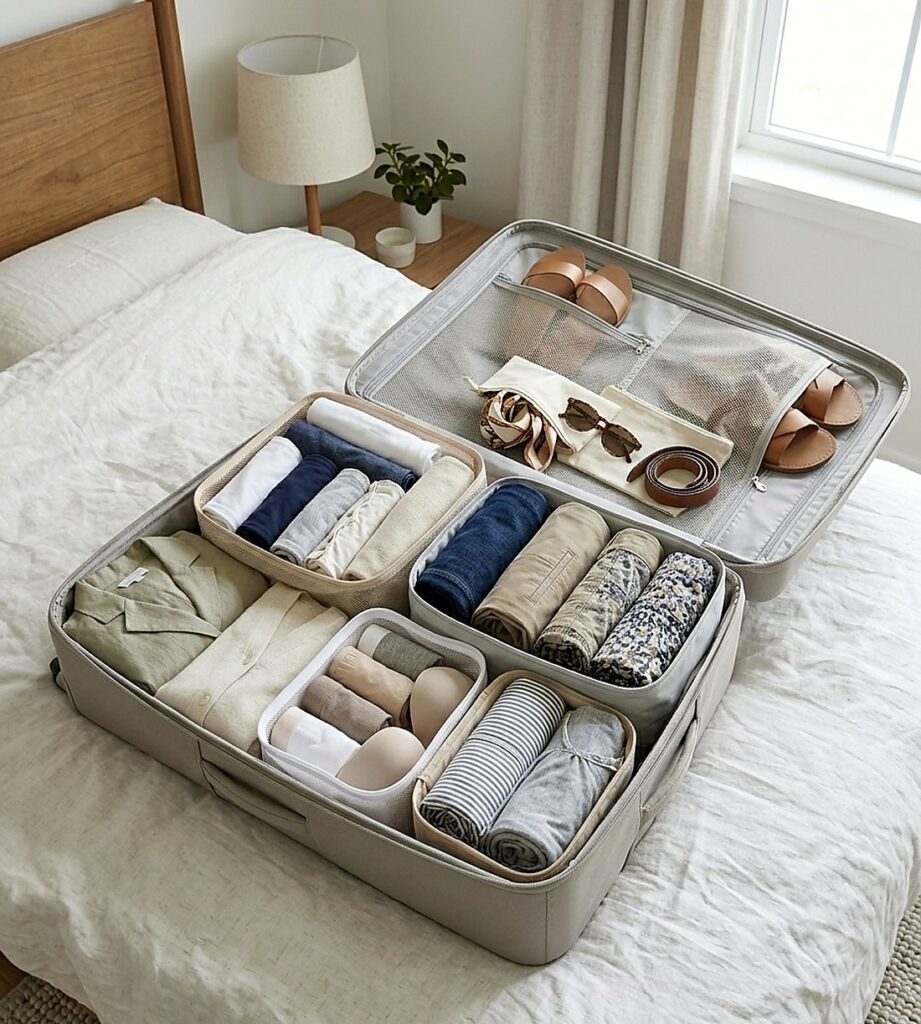
One of the biggest sources of friction during a trip is not being able to see what you packed. Everything is there, but it’s hidden or mixed together. That’s why organisation is important.
Here are three ways to stay organised:
Use packing cubes: Packing cubes help separate categories like tops, bottoms, and undergarments, creating immediate clarity. You’re no longer searching through your entire suitcase to find one item.
Roll your clothes: Instead of folding them, roll them. This helps save space and improves visibility. You can see multiple items at once, rather than stacking them on top of each other.
It may seem like a small shift, but it changes how you interact with your suitcase every day.
3. Choose versatile pieces so you can do more with less
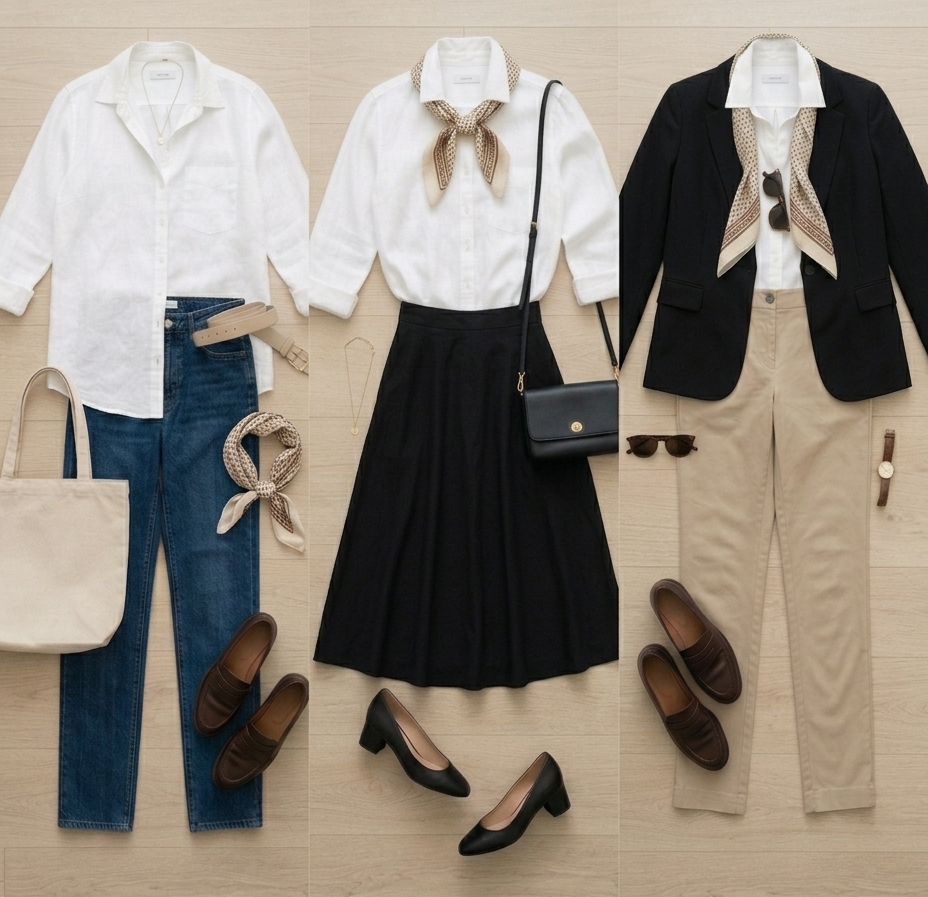
Overpacking often comes from trying to prepare for every possible scenario, even though most of those scenarios never happen.
Instead of packing for possibilities, pack for flexibility. Choose pieces that can be styled in multiple ways. A top that works with different bottoms. Shoes that transition from day to evening. Layers that adapt to changes in weather.
Multi-use items do a lot of heavy lifting here. A light jacket that adds structure to an outfit while also providing warmth. A scarf that works for both style and practicality.
The goal is not fewer items for the sake of it. It’s fewer items that do more.
4. Plan beyond your suitcase to optimise your baggage allowance
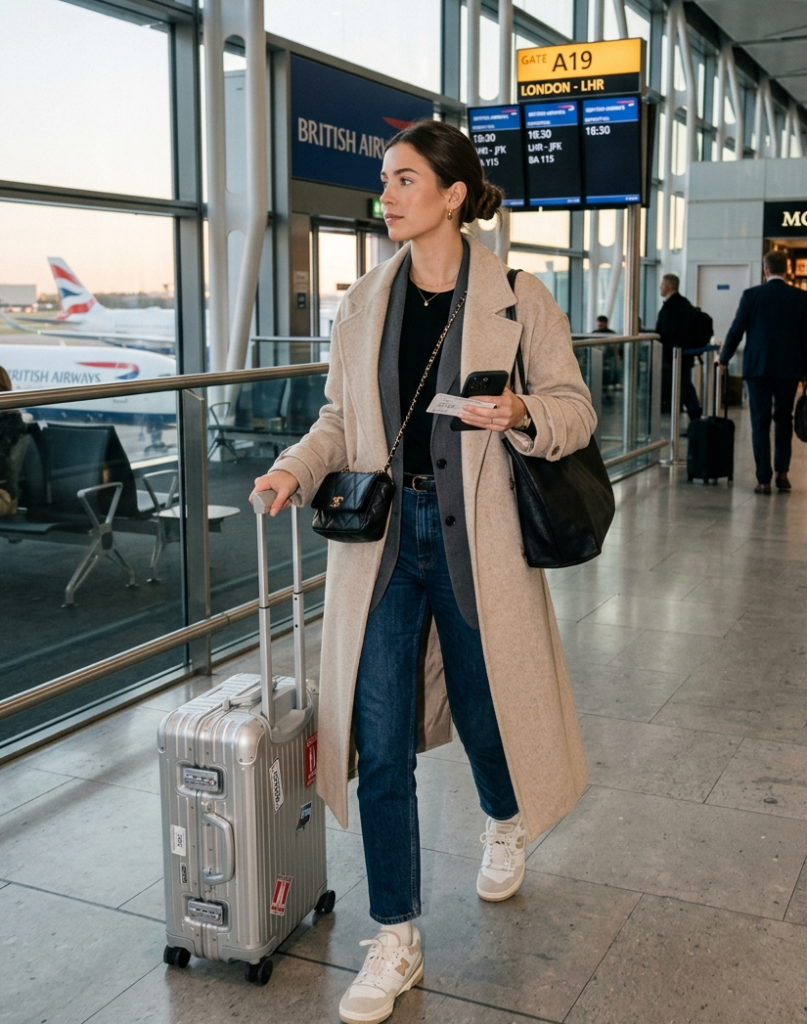
Overpacking often comes from trying to solve every possible scenario inside your suitcase. But when you plan beyond the suitcase itself, you remove the need to carry everything with you.
Wear your bulkiest items: To make room in your suitcase, wear your bulkiest items on the plane, like jackets or heavier shoes. This frees up space and makes your luggage easier to manage.
Have a basic laundry plan: If you’re traveling for longer, having a simple laundry plan changes everything. It allows you to repeat pieces intentionally, rather than overpacking to avoid repetition.
Put heavier items in your hand luggage: Where possible, use your hand luggage for heavier items that are not bulky. This helps you make the most of your weight allowance without overloading your main suitcase.
This approach helps you use your baggage allowance more effectively without adding extra weight.
5. Pack your luggage so no space goes to waste
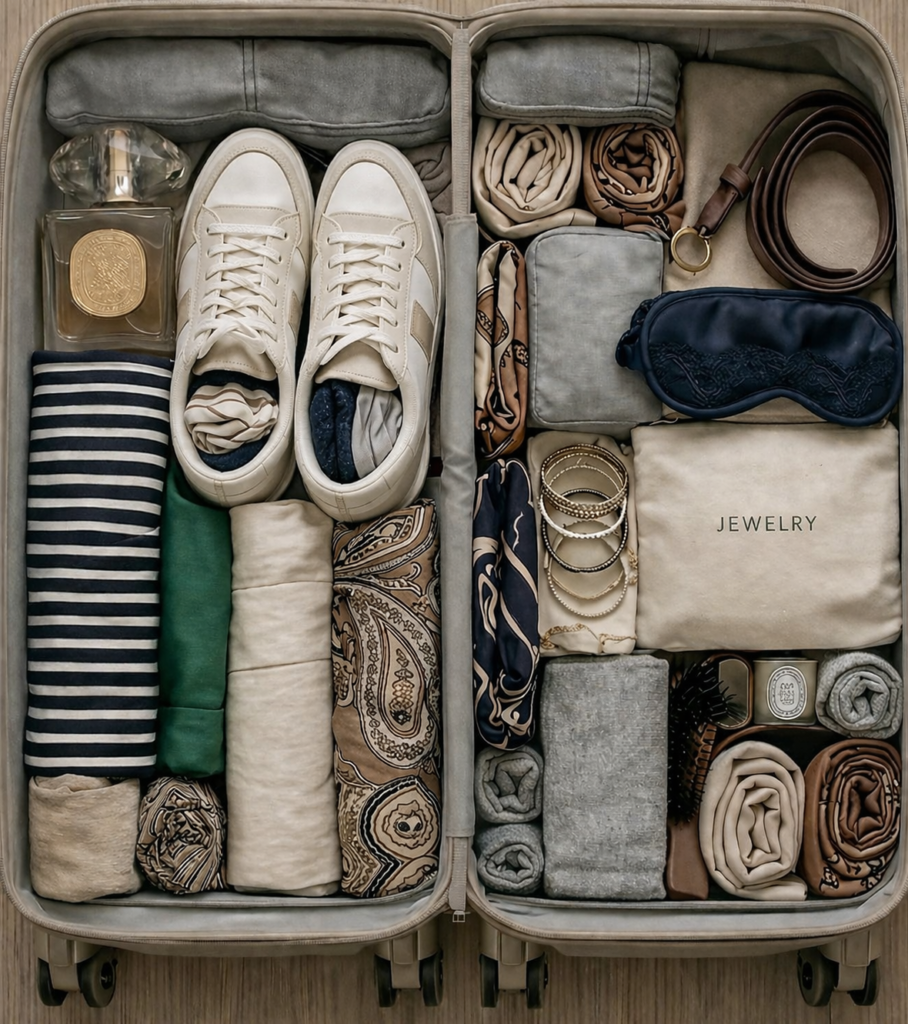
Sometimes, you still have weight allowance left, but your suitcase feels full. This is where using hidden or unused space becomes important.
Packing well is not just about what you bring, but how you place it.
Here are simple ways to make the most of the space you already have:
Fill shoes with smaller items: Use the inside of your shoes for socks, underwear, or accessories. It keeps their shape while freeing up space elsewhere.
Use the corners and edges: Tuck smaller items into the corners of your luggage where bulkier items don’t fit naturally.
Place heavier items at the base: Position heavier items near the wheels of your suitcase so it rolls more easily and stays balanced.
When you use your space intentionally, you create room without needing to add more luggage or remove essentials.ing to add more luggage or remove essentials.
Packing well is about removing decisions
Packing well is not about discipline or restriction. It’s about reducing the number of decisions you have to make.
On an average day, we make thousands of decisions, many of them small, repetitive, and easy to overlook. But they add up. And when you’re traveling, those small decisions show up in the moments that should feel easy. What to wear, where to find something, how to make an outfit work.
When your suitcase is organised, your mornings feel easier. When your outfits are planned, you don’t waste time figuring things out. When everything has a place, you’re not constantly searching or rearranging.
And that changes the entire experience of your trip.